Prophylaxis

People with von Willebrand disease (VWD) are at increased risk of bleeding, which may manifest as frequent nosebleeds, easy bruising, prolonged bleeding from minor cuts, excessive bleeding during dental treatment, and heavy menstrual bleeding.1


Prophylaxis with a von Willebrand factor (VWF) concentrate is recommended to prevent bleeding in people with severe von Willebrand disease.2, 3 wilate® prophylaxis is effective in adults, adolescents and children with all von Willebrand disease types, reducing the rate of bleeding compared with on-demand treatment.4

von Willebrand factor prophylaxis

in people with von Willebrand disease

Prophylaxis with VWF concentrates*

Can effectively prevent bleeding2
May reduce the burden of von Willebrand disease and improve quality of life2
Is recommended in patients with severe von Willebrand disease2

* Prevention and treatment of haemorrhage or surgical bleeding in von Willebrand disease (VWD), when desmopressin (DDAVP) treatment alone is ineffective or contra-indicated.

von Willebrand factor prophylaxis

in people with von Willebrand disease

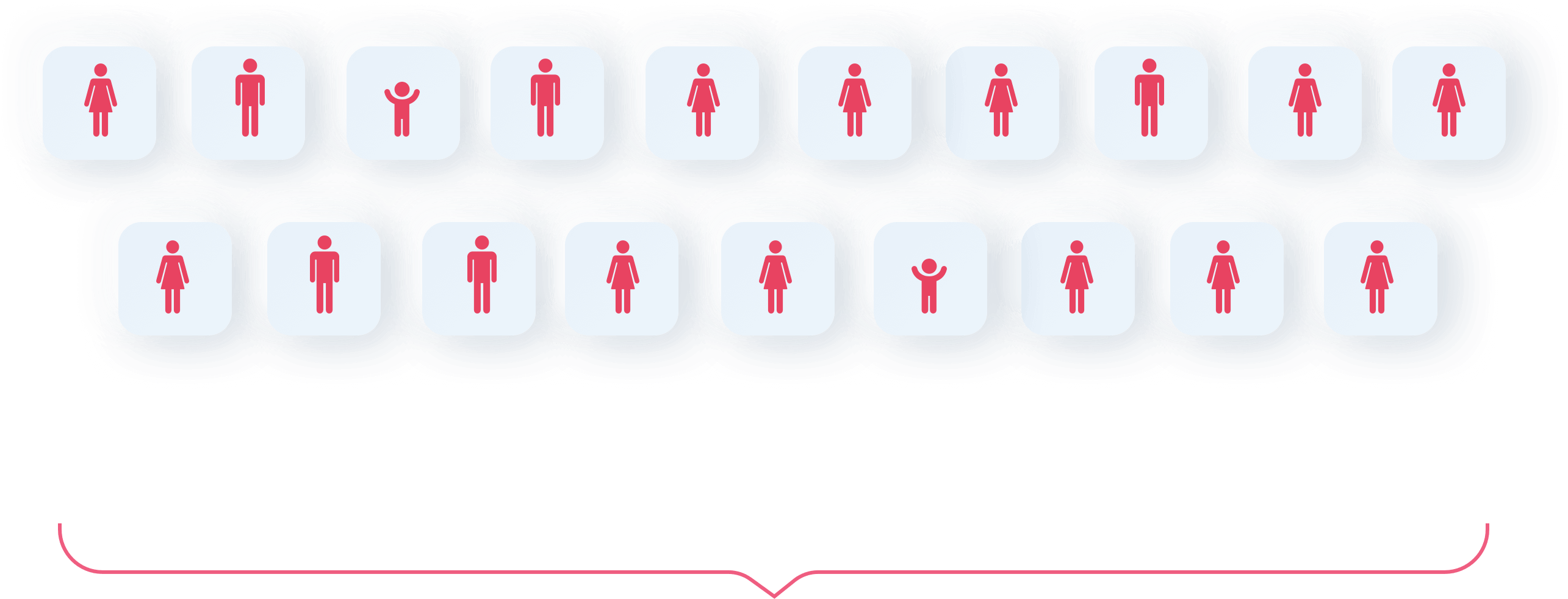
17Countries

110PUPs enrolled

38Centres

VWD: von Willebrand disease.
VWF: von Willebrand factor.

Clinical experience with wilate®

prophylaxis in von Willebrand disease

wilate® is indicated for prophylactic use in von Willebrand disease in the European Union5
Efficacy of wilate® prophylaxis has been demonstrated in

Prospective clinical
trials
in adults4 and
children4,6
Real-world clinical
practice7-9

VWD: von Willebrand disease.

Clinical experience with wilate®

prophylaxis in von Willebrand disease

wilate® is indicated for prophylactic use in von Willebrand disease in the European Union5
Efficacy of wilate® prophylaxis has been demonstrated in

Prospective clinical trials in adults4 and children4,6

Real-world clinical practice7-9

wilate® prophylaxis

reduced the bleeding rate compared with previous treatment in children, adolescents and adults4

Data from 4 prospective, multicentre Phase II/III trials

2-1_5@2x
19 patients on wilate® prophylaxis
Aged 5–73 years

wilate® prophylaxis

reduced the bleeding rate compared with previous treatment in children, adolescents and adults4

Data from 4 prospective, multicentre Phase II/III trials

of patients had
type 3 VWD

median (range 3-46 months) duration of prophylaxis

wilate® prophylaxis

reduced the bleeding rate compared with previous treatment in children, adolescents and adults4

Data from 4 prospective, multicentre Phase II/III trials

Bleeding frequency significantly reduced after the start of wilate® prophylaxis

Male/female
adults/children ≥ 5.5 years with VWD†

WIL-297*

Prospective run-in study:
on-demand

with any pdVWF/FVIII concentrate

WIL-297*

Prospective run-in study:
on-demand

with wilate® 2–3 x per week at 20–40 IU/kg§
6 months
12 months
Patients could be enrolled into the WIL-31 study if they experienced:
  • ≥ 6 BEs in WIL-29‡
  • ≥ 2 of these BEs treated with a VWF-containing product
For a full list of criteria click here
Primary endpoint
  • > 50% reduction in total ABR during prophylaxis (WIL-31) vs prior on-demand treatment (WIL-29)
Key secondary endpoints
  • Spontaneous ABR
  • Consumption of wilate®
  • Efficacy of wilate® in the treatment of breakthrough bleeds and surgical prophylaxis
  • Treatment-emergent AEs
* WIL-29 was a 6-month, prospective, observational run-in study that collected data on treated BEs in VWD patients during routine clinical practice. 
† Including VWD type 1, type 2 (except type 2N) and type 3 and excluding patients with a history or suspicion of VWF and FVIII inhibitors or a history of thromboembolism within 1 year prior to enrolment.
‡ Excluding menstrual bleeds.
§ Recommended dosing regimen, which could be adapted based on individual patient response.
AE: adverse event; ABR: annualised bleeding rate; BE: bleeding event; FVIII: factor VIII; IU: international units;
pdVWF: plasma-derived von Willebrand factor.
VWD: von Willebrand disease.

WIL-31 is the largest prospective prophylaxis study in VWD5 

The WIL-31 study included adult and paediatric patients with all three types of VWD (N=33)*

6-<12
Years

27% n=9

12-<17
Years

27% n=6

17-61
Years

27% n=18

MALE

58% n=19

FEMALE

42% n=14

severe
type 1

18% n=6

type 2a

15% n=5

Type 3

67% n=22

*43 patients were analysed for safety of wilate®; 33 patients were analysed for efficacy of wilate®. 
Ten patients excluded from efficacy analysis due to unconfirmed VWD status. 
VWD: von Willebrand disease.

Click to explore results from WIL-31, the largest prospective prophylaxis study in VWD 

Overall population

(n=33)
Nose bleeds9
(n=33)
Females of childbearing age10
(n=5)
Children (n=9) and
adolescents (n=6)11

Click to explore results from WIL-33, the first prospective study of VWF prophylaxis specifically in children <6 years with severe VWD

Overall population

(n=33)

WIL-31 is the largest prospective prophylaxis study in VWD5 

The WIL-31 study included adult and paediatric patients with all three types of VWD (N=33)*

decrease

Mean total ABR ± SD during

  • On-demand (WIL-29): 33.4 ± 23.6
  • wilate® prophylaxis (WIL-31): 5.2 ± 7.7
Click here to download the visual abstract

Mean (SD) ABR

26.1
-86%
3.7
(22.4)
(6.7)

Total treated

19.0
-88%
2.3
(16.3)
(5.0)

Spontaneous
treated

References

  1. de Wee EM et al. Thromb Haemost 2012; 108:683-92.
  2. Miesbach W and Berntorp E. Thromb Res 2021; 199:67-74.
  3. Connell NT et al. Blood Adv 2021; 5:301-25.
  4. Berntorp E et al. Haemophilia 2009; 15:122-30.
  5. wilate® SmPC, updated June 2021.
  6. Nowak-Göttl U et al. Haemophilia 2013; 19:887-92.
  7. Halimeh S et al. Thromb Haemost 2011; 105:597-604.
  8. Khair K et al. Presented at ISTH 2019 (Poster PB0808).
  9. Sholzberg M et al. TH Open 2021; 5:e264-72.